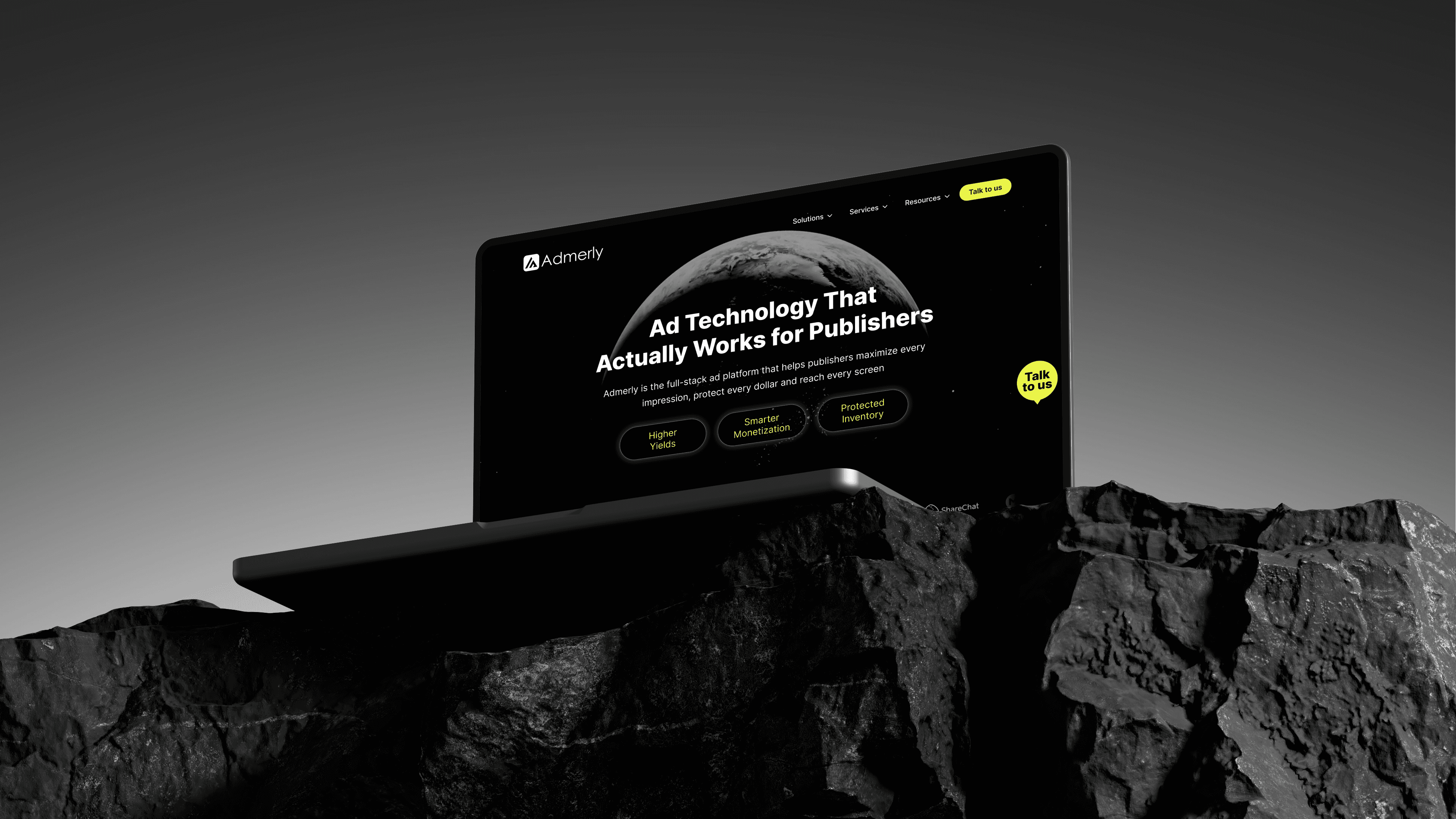
Project Overview
Admerly is an ad-tech platform that helps publishers maximize revenue, improve monetization, protect inventory, and grow audiences through a suite of specialized solutions. As part of a major website redesign initiative, I worked alongside my manager to redesign the platform across desktop and mobile experiences. The project included a homepage, seven product pages, a contact page, and their corresponding mobile versions. The goal was to modernize the platform, simplify complex product communication, strengthen enterprise credibility, and create a more conversion-focused experience for potential customers. Alongside contributing to the desktop redesign, I designed the mobile experience for the platform to ensure consistency across devices.
Project Background
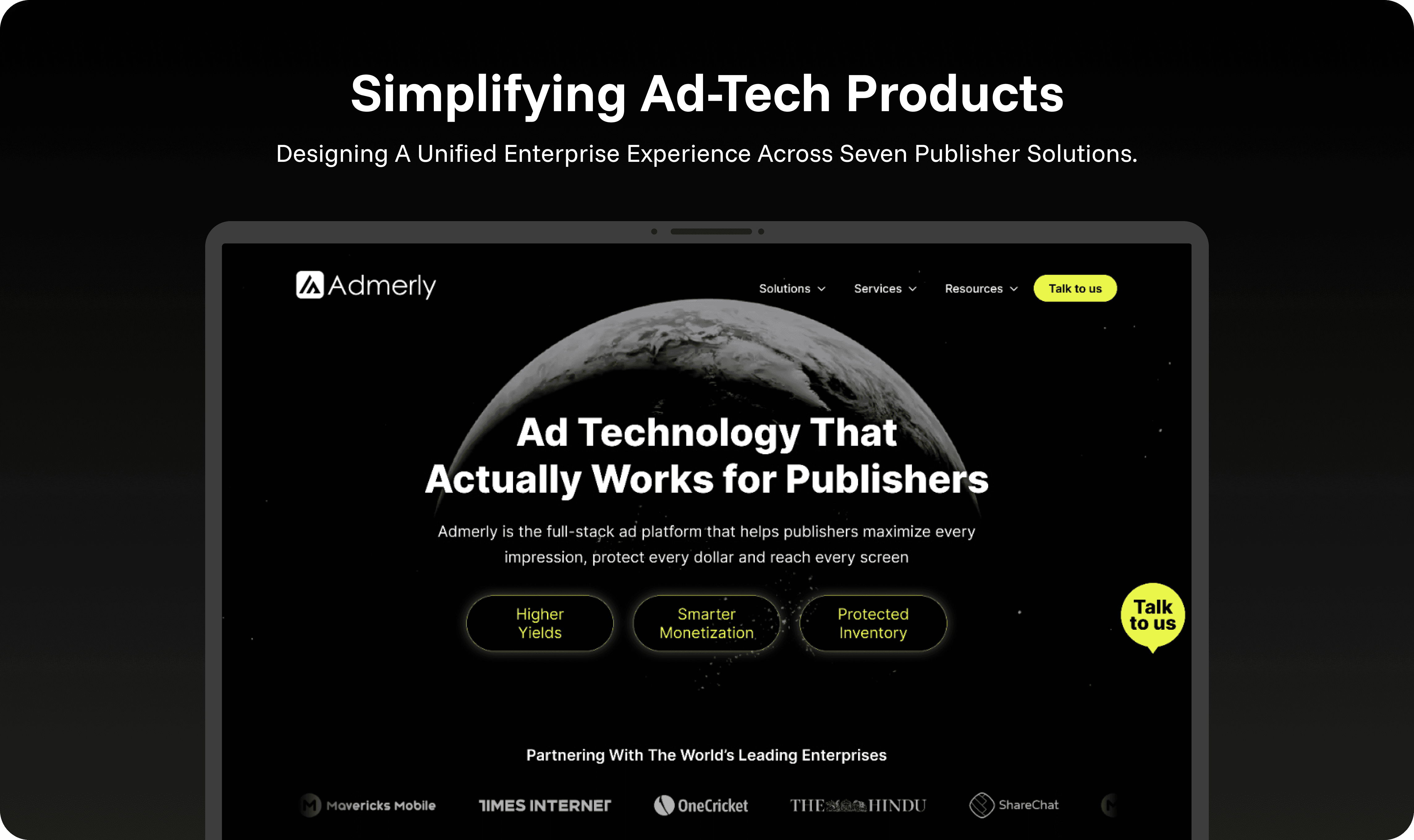
With more than 15 years of experience in the ad-tech industry, Admerly offered multiple solutions addressing different publisher challenges, including audience growth, video monetization, revenue optimization, traffic quality, and ad operations. However, the existing website no longer reflected the scale or sophistication of the business. While the previous experience contained extensive product information, much of it was presented through text-heavy layouts and a relatively flat information hierarchy. The website explained products, but it did not always communicate their value effectively. For a platform serving publishers across multiple markets, this created a gap between the complexity of the products and the clarity of the user experience. The redesign aimed to solve this challenge by creating a more modern enterprise presence while making technical products easier to understand and explore. Stakeholders also wanted the platform to adopt a darker visual direction and feel more premium, contemporary, and conversion focused.
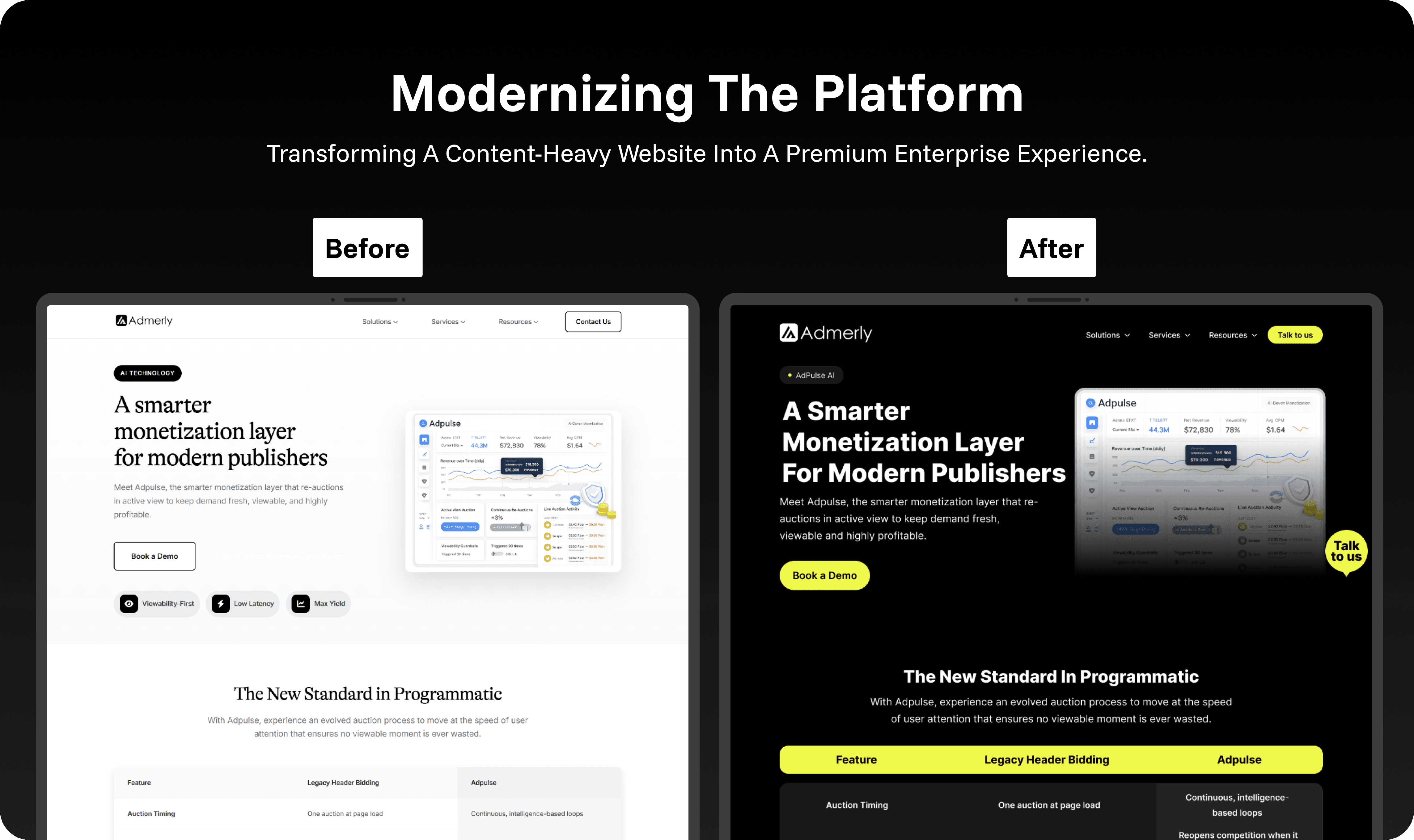
The redesign introduced a stronger visual hierarchy, modern UI patterns, and a more premium enterprise identity.
Communicating Complex Products Clearly
One of the biggest challenges throughout the project was simplifying technical concepts without removing important information. Each product solved a different problem for publishers, making communication a critical part of the design process. Rather than relying on long paragraphs to explain functionality, I focused on transforming complex ideas into visual narratives that could be understood quickly. Different products required different approaches. The Notify page, for example, used an audience growth flywheel to explain how publishers could attract, engage, retain, and grow audiences over time. This was one of the most challenging pages to design because the concept was more abstract than the other solutions. The flywheel helped convert a complicated process into a visual model that users could understand within seconds. Other pages used step-by-step workflows, structured frameworks, comparison tables, and visual diagrams to communicate technical concepts. BidSense, for instance, used a process-driven approach to explain how optimization decisions happen across different stages. AdPulse AI used comparison tables inspired by modern SaaS products to help users quickly understand the value of the platform against traditional approaches. Instead of asking users to read large amounts of content, the redesign focused on helping them learn through visual communication.
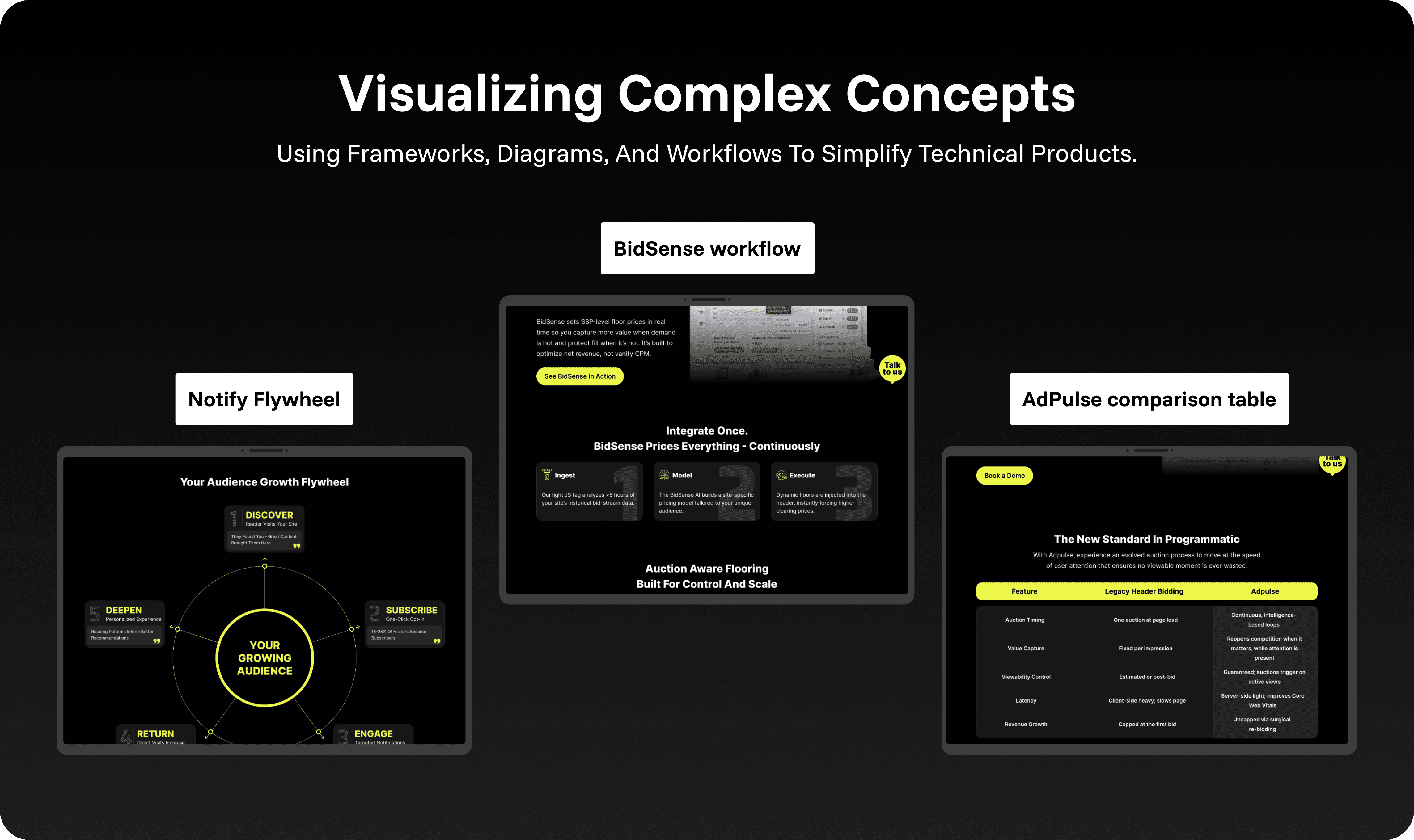
Converted complex product explanations into visual frameworks that users could understand more quickly than text-heavy content.
Designing for Conversion
Generating conversations with potential customers was one of the primary goals of the website. To support this objective, the experience was designed around clear and consistent conversion opportunities. A simplified navigation structure helped users focus on key content areas without becoming overwhelmed by choices. Rather than exposing every page within the navigation, content was grouped into broader categories that made exploration easier. A persistent call-to-action was also introduced to ensure users could reach out at any point during their journey. Since stakeholder goals centered around generating leads and conversations, keeping an action-oriented pathway visible became an important part of the experience. Beyond the sticky CTA, every product page concluded with a dedicated conversion section positioned above the footer. These sections used product-specific messaging rather than generic contact prompts. Instead of repeating the same call-to-action across the website, each page encouraged users to take the next logical step based on the product they had just explored. This approach helped create a stronger connection between product understanding and user action.
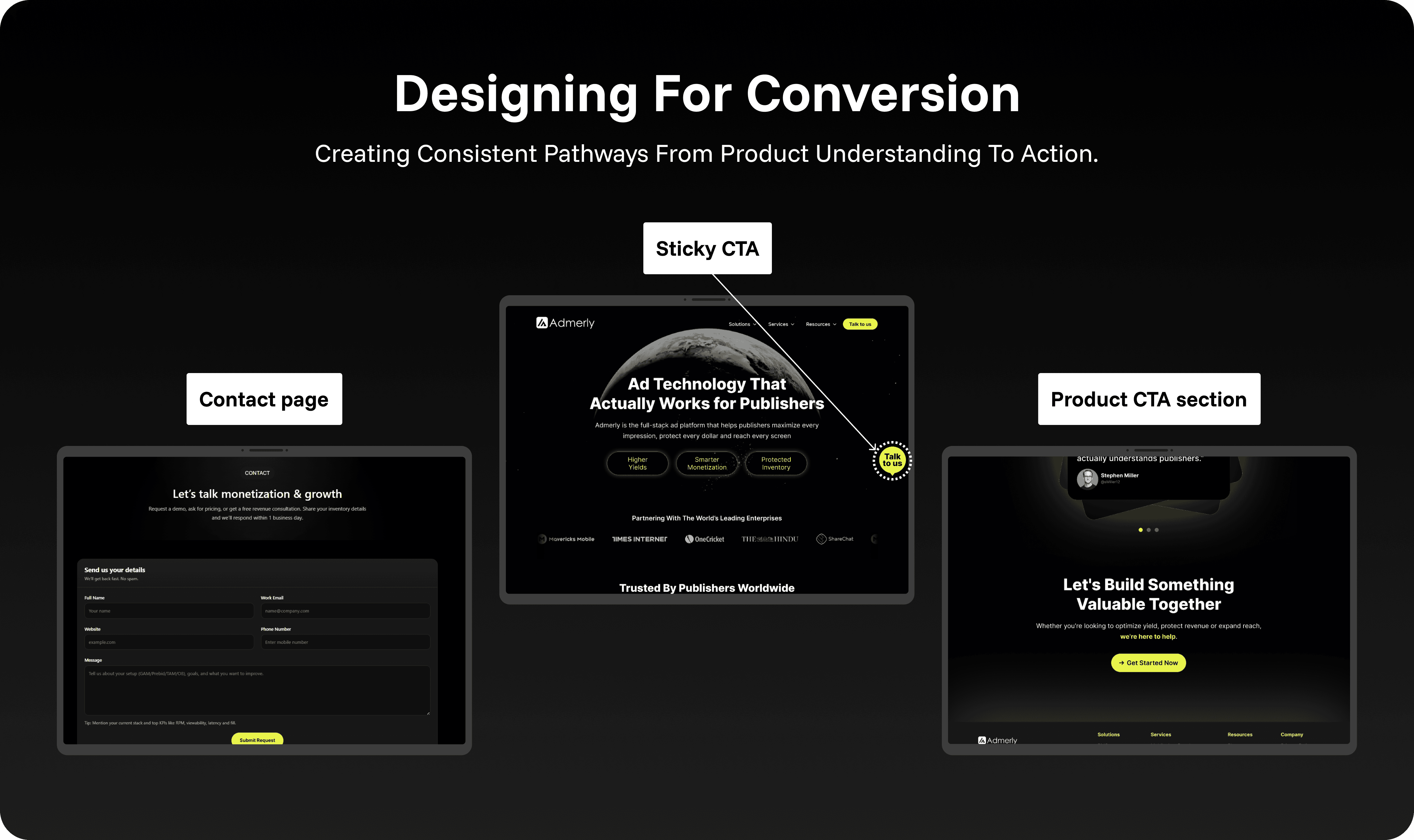
Introduced persistent and context-specific calls-to-action to support lead generation throughout the user journey.
Creating a Unified Product Ecosystem
Although Admerly offered multiple solutions, it was important that the platform felt like a connected ecosystem rather than a collection of independent products. A consistent visual language was applied across the homepage and product pages through shared layouts, components, navigation patterns, content structures, and call-to-action treatments. This created familiarity as users moved between products while still allowing each solution to communicate its unique value proposition. Progressive disclosure played an important role in supporting this experience. Because the platform contained large amounts of information, presenting everything at once would have made pages difficult to navigate and understand. Instead, information was introduced gradually. Pages typically began by establishing the product's value proposition, followed by supporting benefits, workflows, proof points, and trust-building content before finally encouraging users to take action. This structure helped users build understanding step by step rather than forcing them to process every detail immediately. The homepage followed the same principle. It first communicated business outcomes, then established credibility through publisher partnerships, company experience, and platform metrics before introducing the broader ecosystem of products and services.
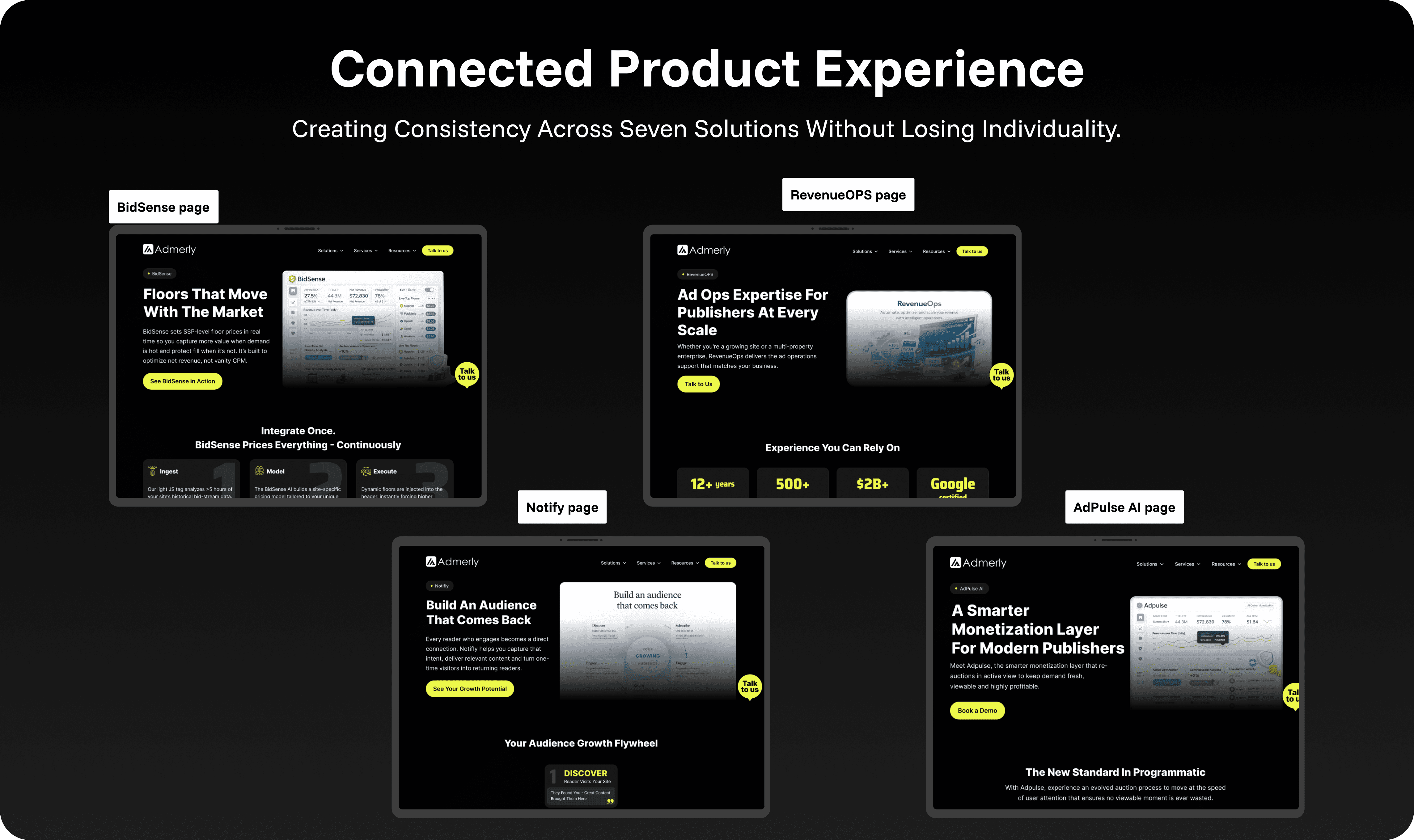
Shared design patterns created familiarity across products while allowing each solution to communicate its unique value.
Progressive Disclosure
Because Admerly's products involved large amounts of technical information, presenting everything at once would have made pages difficult to navigate and understand. To address this, I applied the principle of progressive disclosure throughout the platform. Rather than exposing all details immediately, information was revealed in a structured sequence that guided users from awareness to understanding. Pages typically began with a clear value proposition, followed by key benefits, workflows, supporting proof points, and finally conversion opportunities. This approach helped reduce cognitive load, made complex products easier to explore, and allowed users to build understanding step by step instead of processing large amounts of information all at once.
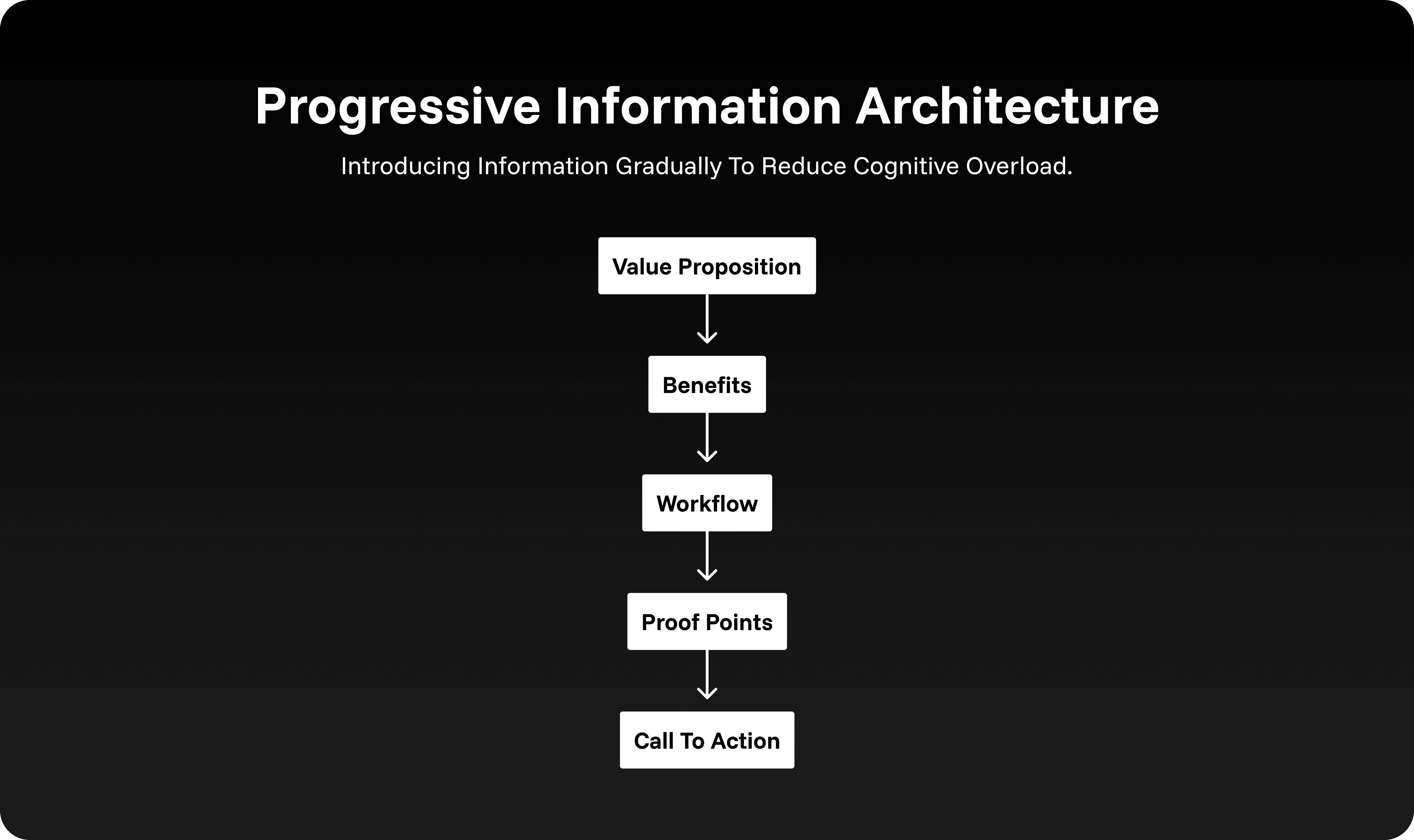
Structured pages to reveal information progressively, helping users understand products step by step.
The Outcome
The redesigned website was successfully approved and launched within a three-week timeline. The final experience transformed a content-heavy platform into a more structured, modern, and enterprise-focused digital experience while improving the way complex products were communicated. Beyond the visual redesign, the project strengthened my ability to organize large amounts of information, translate technical concepts into clear visual frameworks, and design experiences that support both user understanding and business goals. Working closely with my manager and product stakeholders also gave me valuable experience collaborating on a large-scale B2B platform under tight deadlines.
Reducing Design Rework At Scale
Building a centralized design system for ITV Digital's media products.

Increasing Access To Preventive Healthcare
Designing a bilingual platform for a nationwide breast cancer screening initiative.

Centralizing Content For Cricket Fans
Designing an IPL content hub for NewsX across web and mobile.