
Project Overview
Namo Shakti Rath is a nationwide breast cancer screening initiative focused on bringing preventive healthcare closer to women across India. I worked alongside my manager, product leadership, and external consultants to design key parts of the platform, including the registration flow, volunteer onboarding, report access journey, and experiences across both English and Hindi for Web and Mobile Web.
Project Background
Namo Shakti was one of the largest and most high-stakes projects I worked on at ITV Digital. The initiative was launched to support breast cancer awareness and provide free screening camps across multiple cities in India. Unlike many digital products, the challenge wasn't simply building a website. The platform had to educate users, build trust, help women find nearby camps, simplify registrations, support volunteers, and provide access to screening reports. The audience was incredibly diverse. Many users would access the platform through mobile devices, while others would be more comfortable reading Hindi than English. This meant every decision had to prioritize clarity, accessibility, and ease of use.
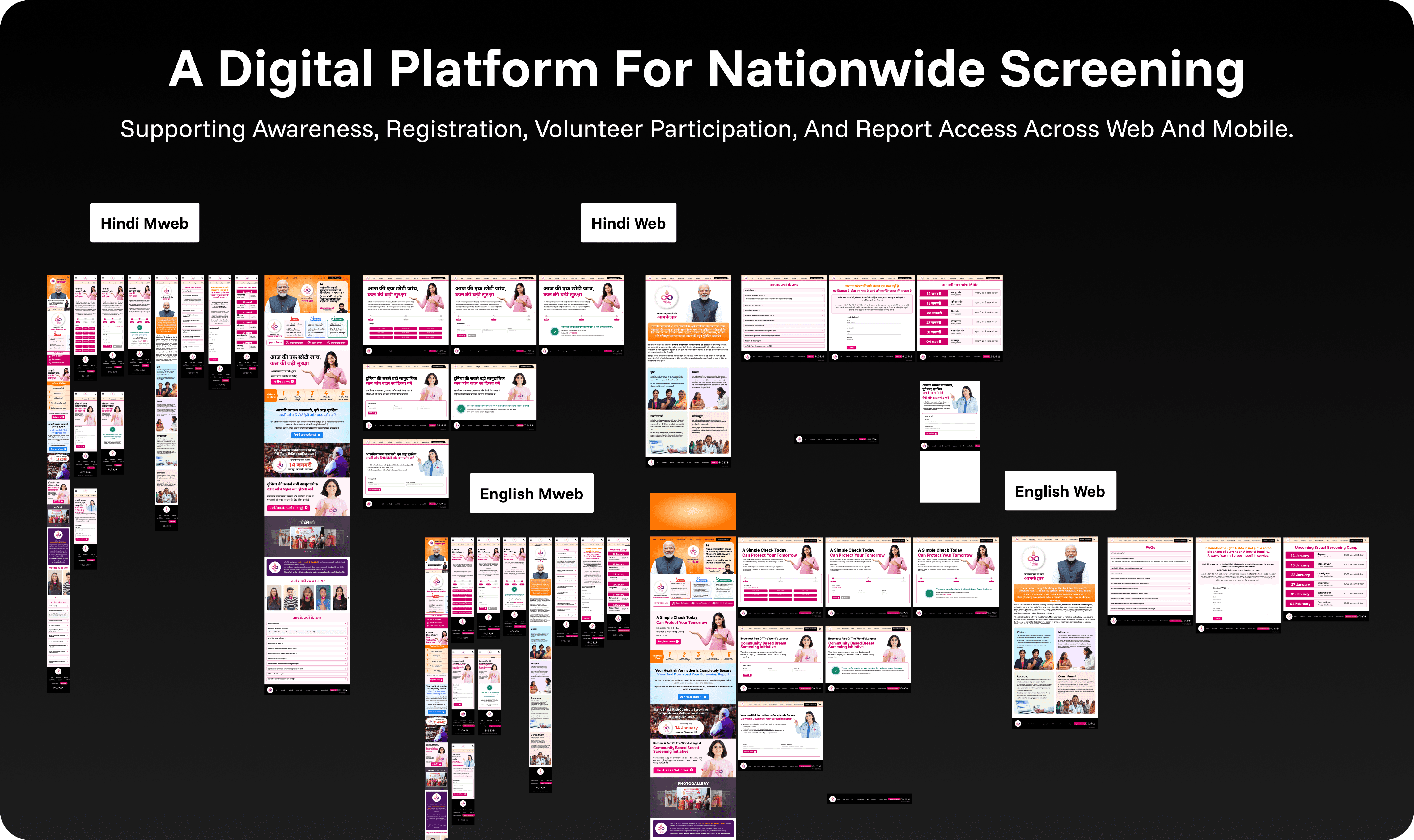
Building a comprehensive digital platform across four experiences: Hindi Web, Hindi Mobile, English Web, and English Mobile.
Building Trust From The First Screen
Trust became one of the most important design considerations throughout the project. Since the platform encouraged women to participate in healthcare screenings, users needed confidence that the initiative was legitimate, active, and operating at scale. The hero section was designed specifically to communicate those signals. Leadership imagery, initiative branding, and real camp photographs were combined to reinforce the credibility of the program. Images from screening camps were placed in the background to show that the initiative was already active across different locations rather than appearing as a concept or awareness campaign. The color palette also carried meaning. Orange was incorporated as a stakeholder requirement, while pink was used because of its strong association with breast cancer awareness initiatives. Together, they helped balance institutional credibility with the healthcare mission of the campaign.
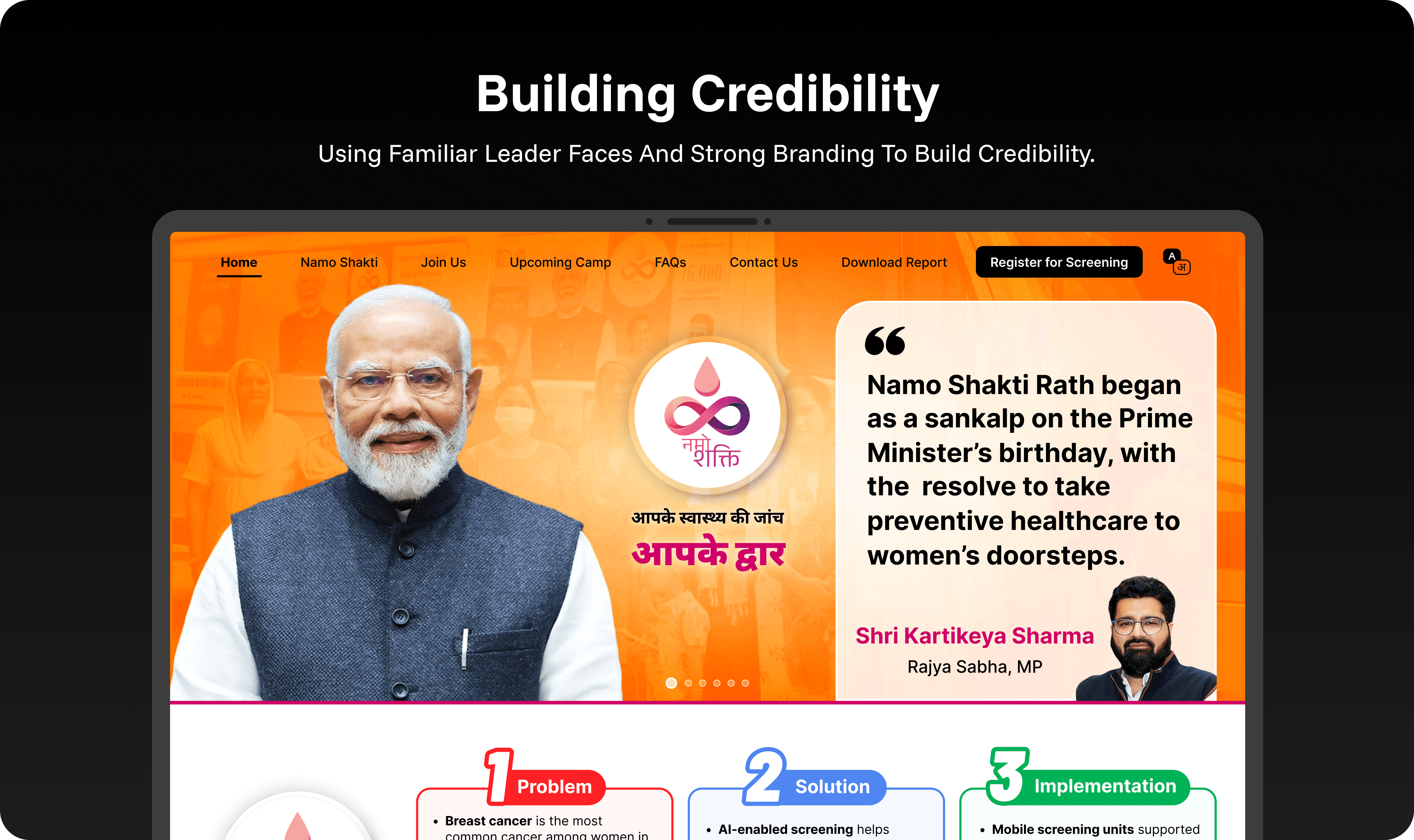
Building credibility through leadership, branding, and real camp imagery.
Educating Before Asking Users To Act
One of the biggest challenges was encouraging participation without overwhelming users. Instead of immediately pushing users toward registration, the homepage was structured to first explain the initiative, highlight the importance of early detection, and demonstrate the impact of screening programs. Healthcare information was broken into visual sections that were easy to scan and understand. Key outcomes, awareness content, upcoming camps, registration steps, and community reactions were presented through cards, illustrations, and concise messaging rather than long blocks of text. The goal was simple: help users understand why the initiative mattered before asking them to take action. This approach also helped answer common questions upfront, reducing uncertainty around the screening process.
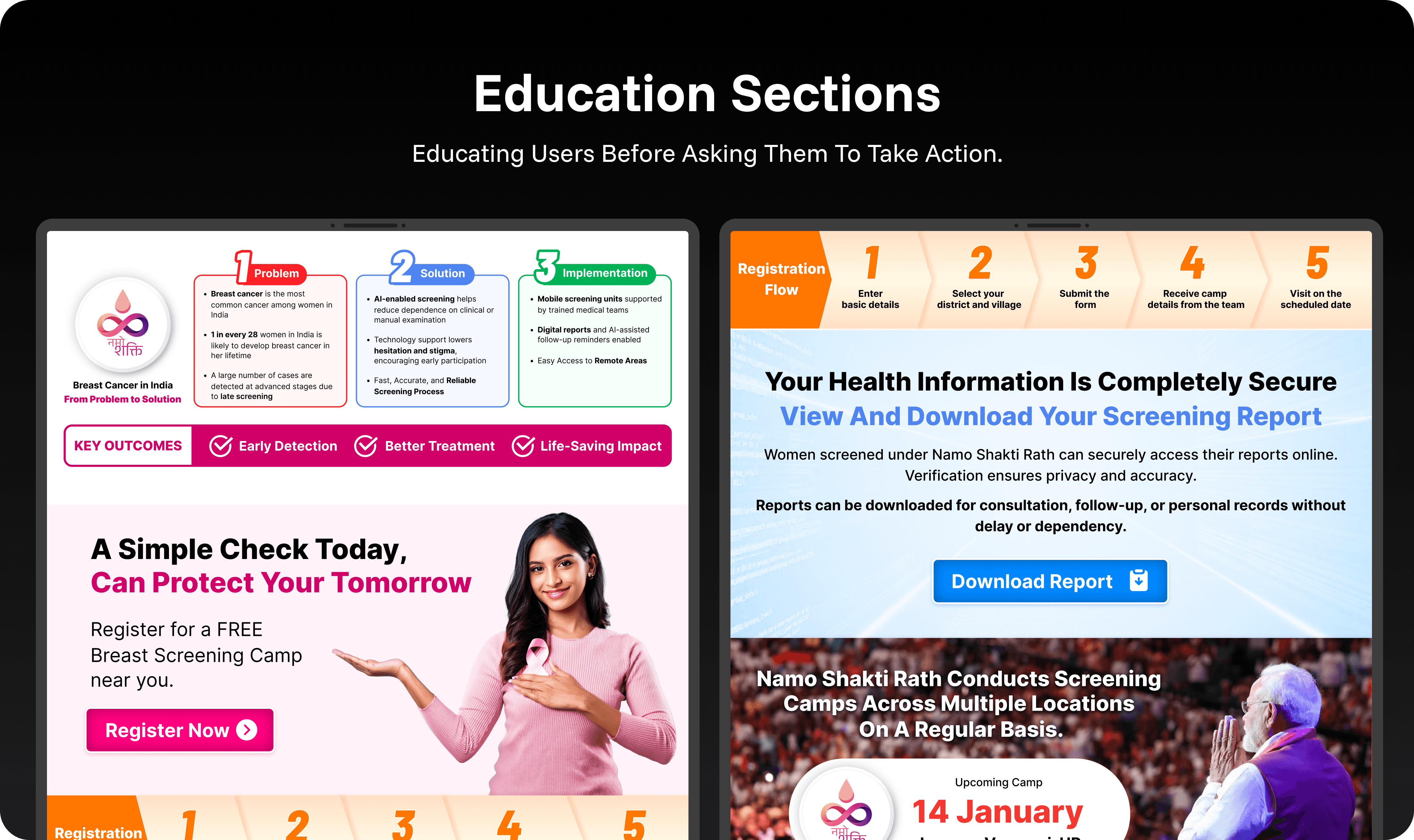
Helping users understand the initiative before registration.
Designing A Low-Friction Registration Journey
The registration flow became one of the most important parts of the project and involved extensive collaboration between design, product, leadership teams, and external consultants. The challenge was finding the right balance between simplicity and functionality. Since the initiative was intended to serve users from a wide range of backgrounds, we wanted to avoid lengthy forms that could discourage participation. At the same time, the registration process needed to support report access later in the user journey. We ultimately decided to collect only three essential pieces of information after slot selection: name, mobile number, and email address. To connect registration with report access, every user received a unique Patient ID upon successful registration. This became a key part of the experience. Users first selected a screening slot, entered their details, and received a confirmation screen containing their Patient ID, selected city, and appointment slot. Later, when they wanted to download their reports, they simply entered their Patient ID and registered mobile number. Rather than treating registration and report access as separate experiences, they were intentionally designed as connected parts of the same journey.
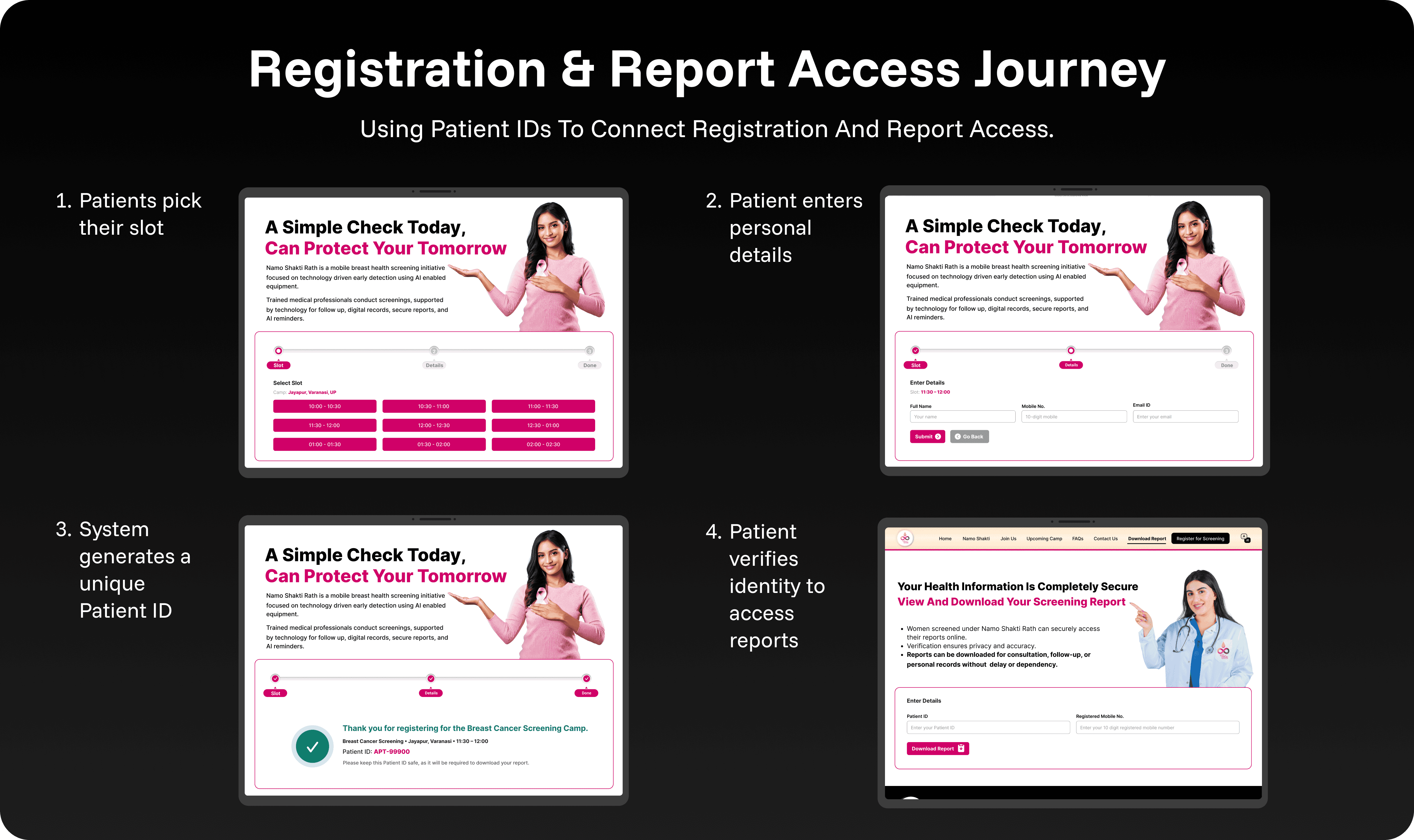
Using Patient IDs connected registration and report retrieval into a single, seamless journey.
Supporting A Diverse Audience
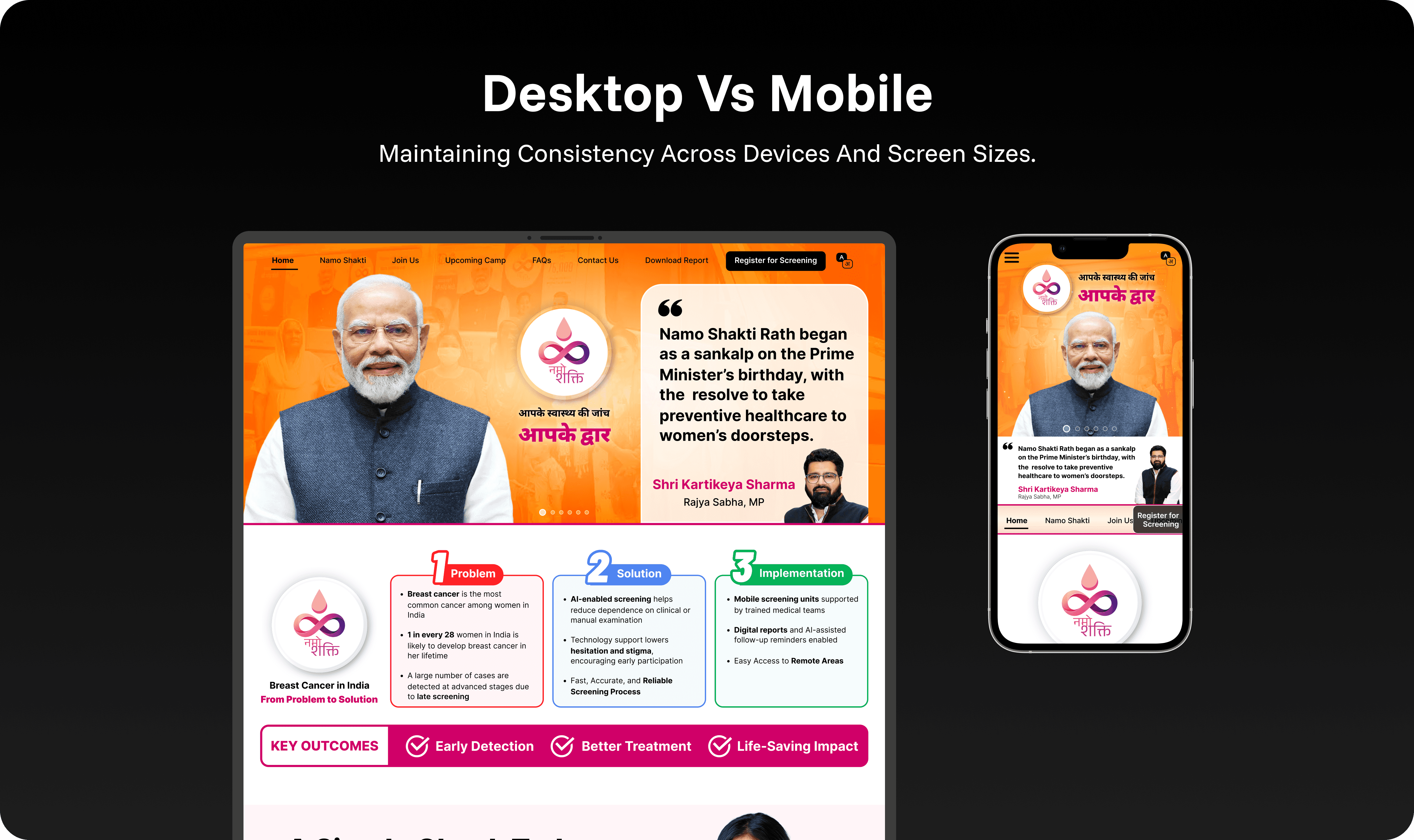
Because the initiative targeted users across India, the platform was designed in both English and Hindi. This introduced an additional layer of complexity because every page, flow, and interaction had to work consistently across four experiences: English Web Hindi Web English Mobile Web Hindi Mobile Web To make language switching effortless, a dedicated language toggle was placed prominently within the navigation on both desktop and mobile experiences. Users could switch languages instantly without navigating through settings or secondary menus. Designing for multiple languages and screen sizes required careful attention to responsiveness, content hierarchy, and layout flexibility to ensure a consistent experience regardless of device or language preference. To maintain consistency across the platform, I also created reusable bilingual interface elements, including button variants for key actions such as registration, report downloads, and volunteer participation. Designing these components in both Hindi and English helped ensure a cohesive experience across Web and Mobile Web while reducing repetitive design work during implementation.
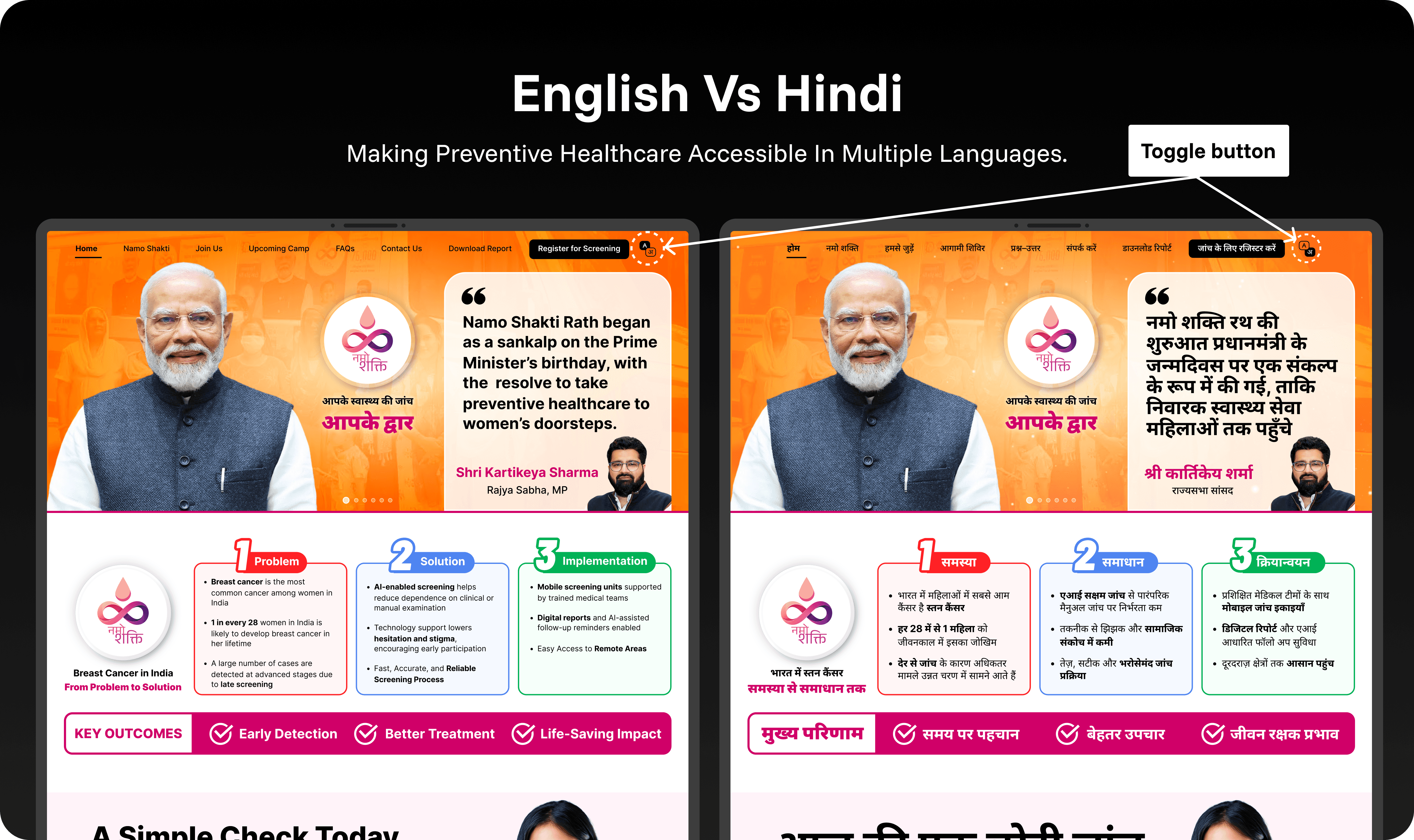
Providing a consistent experience across English and Hindi.
The Outcome
Namo Shakti was successfully delivered under tight deadlines and involved collaboration across multiple stakeholders, including leadership, product teams, and external consultants. The final designs were approved and well received, making it one of the most significant projects I worked on during my time at ITV Digital. Beyond the launch itself, the project helped me strengthen relationships across the organization and gain valuable experience designing for a large-scale public initiative. More importantly, it reinforced a lesson that continues to influence my work today: when designing for diverse audiences, clarity, accessibility, and trust are just as important as visual design.
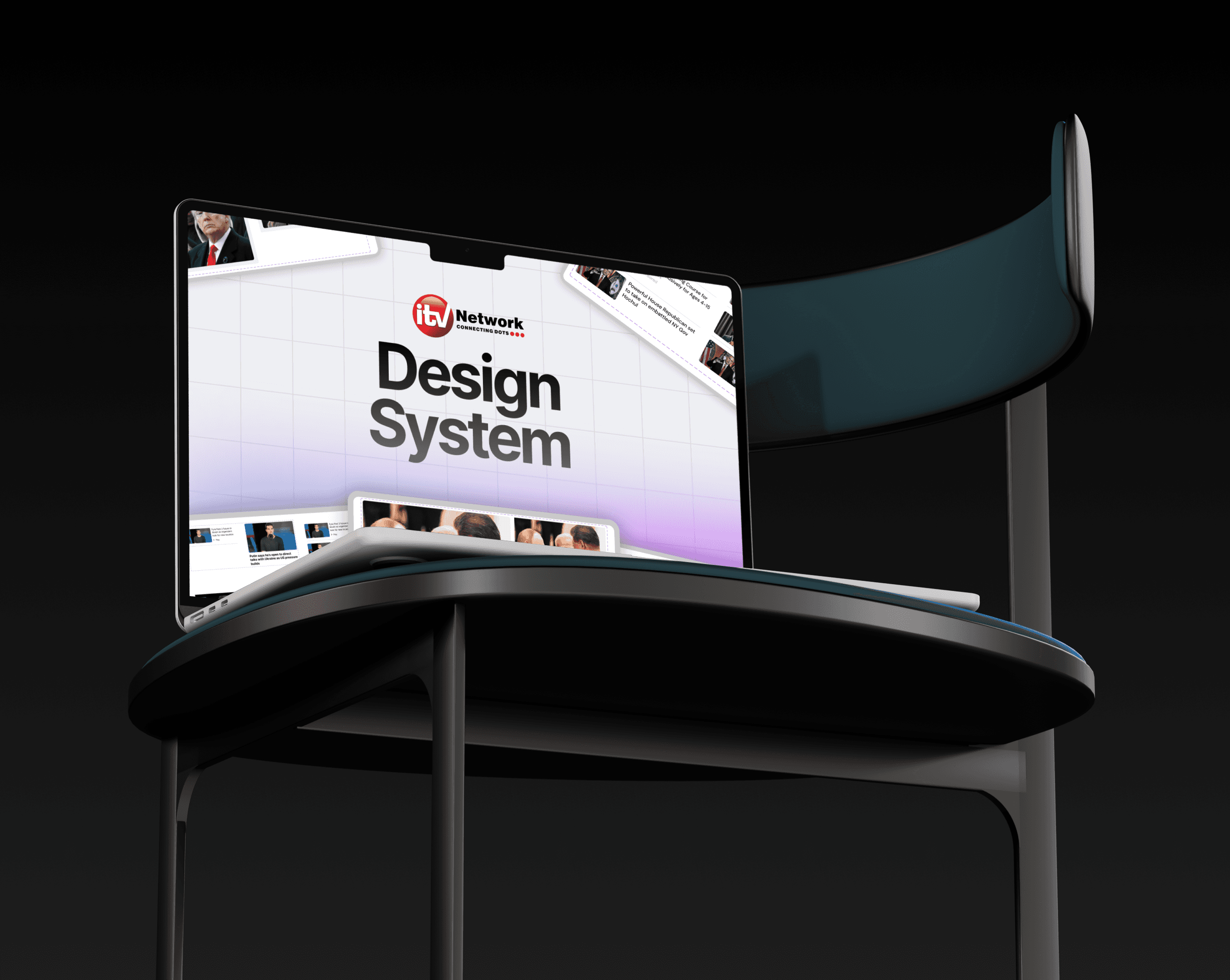
Reducing Design Rework At Scale
Building a centralized design system for ITV Digital's media products.

Centralizing Content For Cricket Fans
Designing an IPL content hub for NewsX across web and mobile.
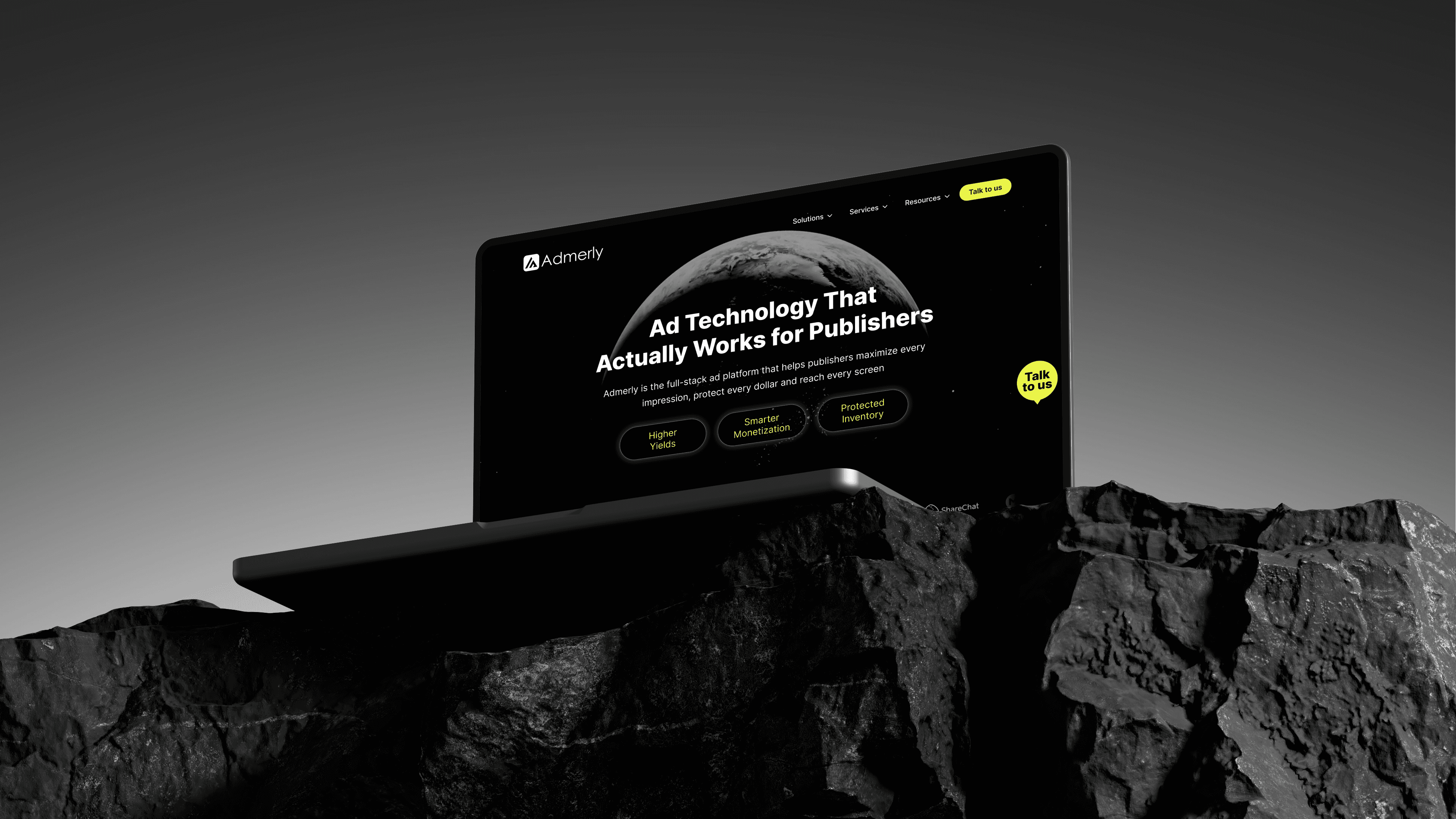
Simplifying Complex Ad-Tech Products
Designing a unified enterprise experience across seven publisher solutions.